

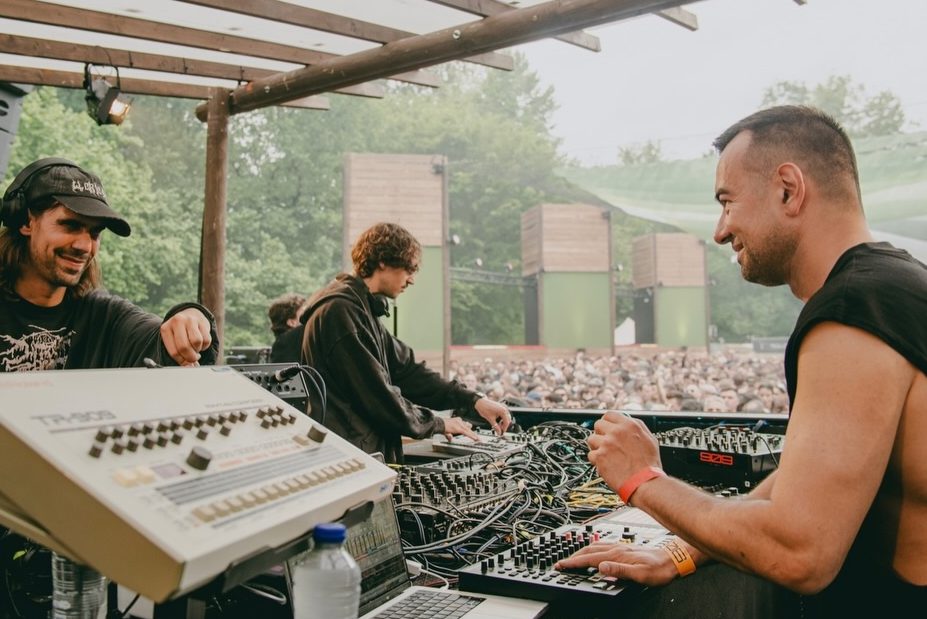
One of live electronic music’s original hardware heads is still at it, more than two decades after Sofia-born KiNK first started darting in and out of booths around the world. What began as a fascination with making club music happen in real time has grown into a constantly evolving practice, with drum machines, synths, controllers and a healthy amount of improvisation all finding their way into the mix.
One thing that’s become evident is that KiNK isn’t interested in standing still. As technology has caught up with the kind of live performance he was already experimenting with years ago, so has his approach — refining his sound, rebuilding his setup and finding new ways to keep the unpredictability without sacrificing what matters on a dancefloor.
We caught up with him ahead of his show with Jeff Mills at Elephant Park on the 22nd August to talk hardware, DIY instincts, sonic evolution and why, despite having access to more gear than ever, some of the best music might still be made on a laptop in a bedroom.
Back in the day, seeing a fully analogue live hardware rig in a booth was like watching alien technology. As dancefloors have become much more tech-literate, how has the audience’s reaction to your live set evolved? What’s the reaction to someone who watches KiNK live for the first time?
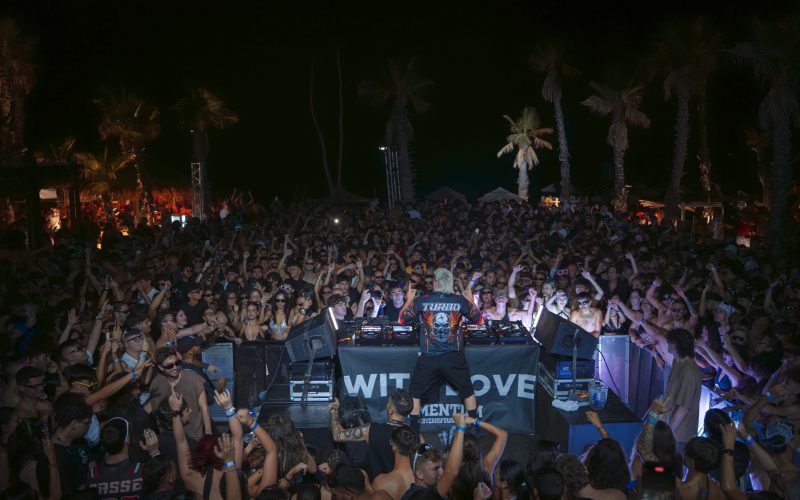
When I started touring with my live set internationally (about 16 years ago), it was easy to impress the crowd, because the music was not designed for immediate impact. I made waves just by creating simple rhythms and melodies on the fly. It was not a novelty even back then, but I believe that my DJ approach to playing music live, maintaining the groove and not following a set list was interesting for that time. The opposite of making a concert.
It was so easy to win the crowd that I overlooked one important detail for years, and that is my sound quality. After the pandemic, I could feel that no matter how fast i was hitting those buttons and turning the knobs, my music didn’t hold up well against skilful DJs, who play perfectly mastered modern production on 4 decks. In the past few years, I focused on improving my sound, on stage and in the studio. I felt I had to relearn how to make and play club music again.
I traded off some of the improvisational elements for more focused performance and fuller sound, which meant replacing some of the drum machine solos and real-time sequencing with parts that I created in the studio. Those who will see me for the first time now will experience a set that is sonically comparable to a DJ who plays well-mastered music, but still there is a healthy dose of improvisational madness, because I need to keep myself entertained too. For the next season, I expect to bring back more of creating the sound on the fly, because the current technology allows it, without any sonic compromise.
We’ve seen you share the stage with a select few artists who match your obsession for real-time performance. What does another producer need to bring to the booth for you to feel that total sonic harmony? What is the exact moment when the improvised chemistry clicks and you realize, “Okay, we’re fully locked in“?
The other artists have to bring their mind and heart! One time I was DJing at an afterparty in Rotterdam, after my live set and at some point the legend Mr G showed up in the DJ booth. Aside from his live sets, he doesn’t DJing often in the traditional way; he had no USB sticks with him, but he wanted to participate, so he was working the mixer while I was selecting and mixing in some music. That was a remarkable moment for me, although technically there was nothing special about it. It’s about having a similar sense of aesthetics in music and having a partner that’s fun and playful, that’s all. Quick hands and a bit of rock’n’roll attitude would help too.
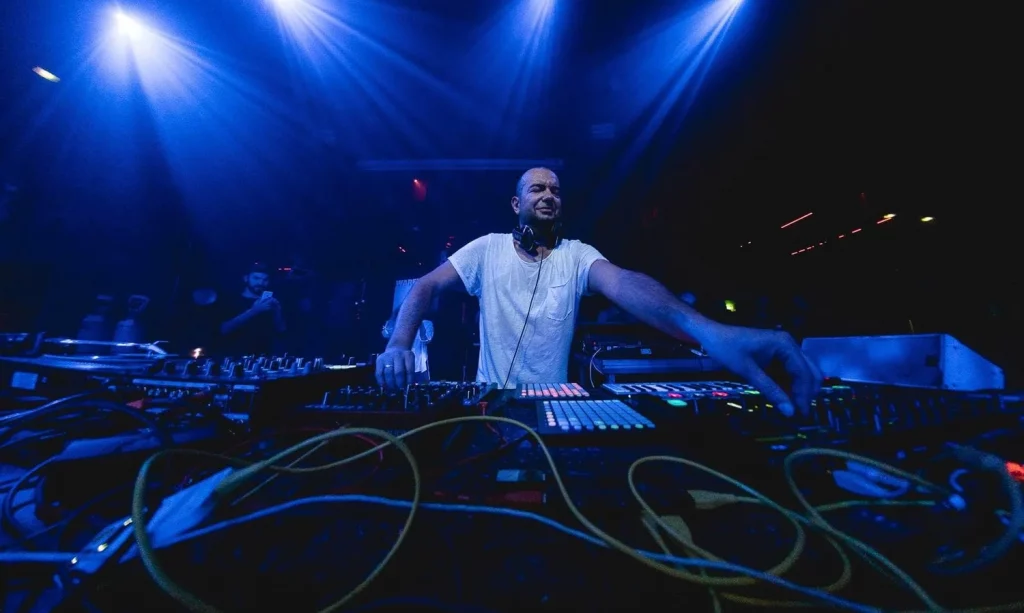
From classic drum machines to futuristic motion controllers, your setup is constantly evolving with high-energy gadgets. What is the latest piece of hardware that has become your absolute best friend both in the studio and on stage?
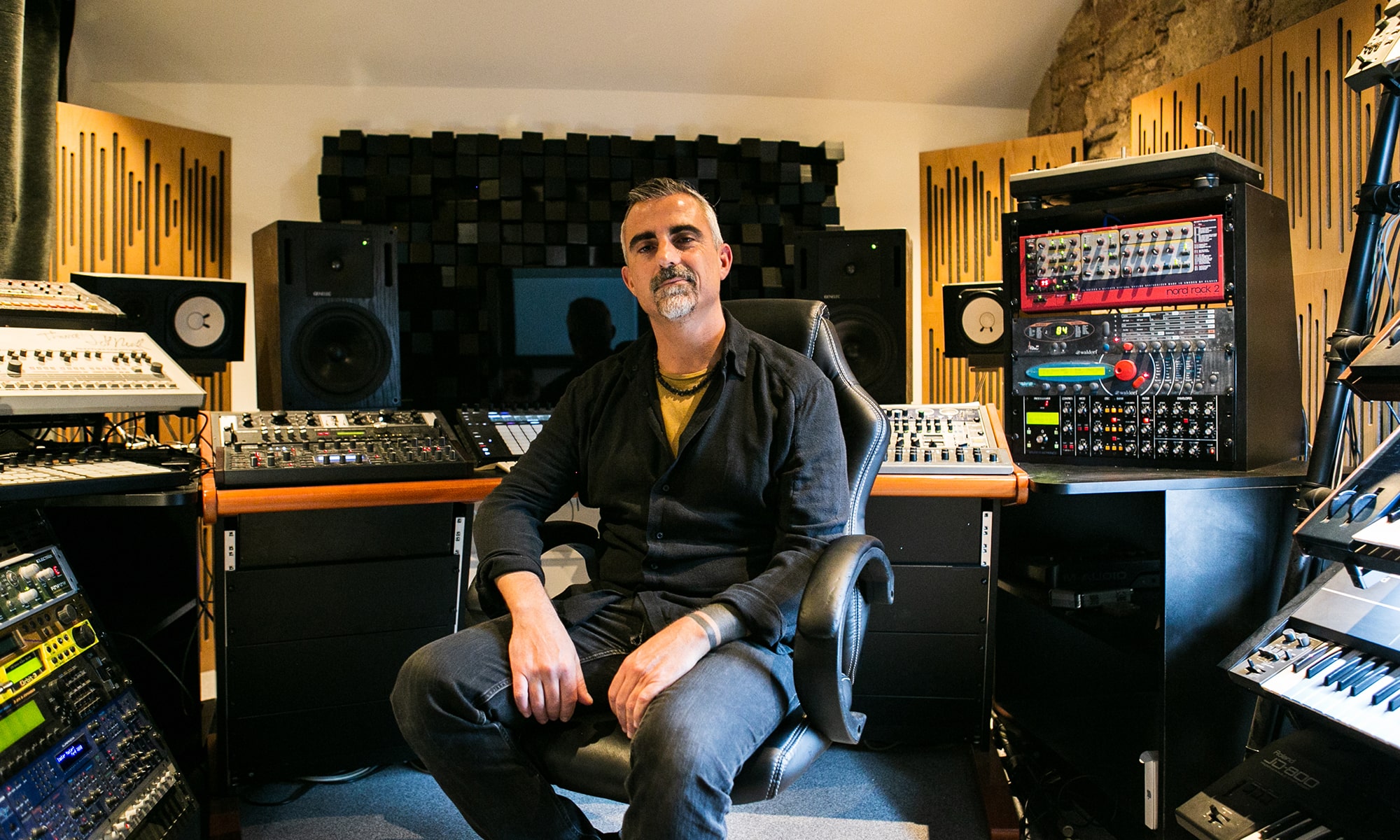
I’m excited to share that I’m building my own MIDI controller with the help of a very creative Bulgarian crew: Resonator Hub and Vatanator. I’m very happy with the philosophy behind my usual, laptop-based setup, but it’s been very nerve-wracking having to connect up to 10 different devices to my computer; often, connections fail during a show. This new controller mimics my setup, but it will be much easier to set up and more stable to perform.
For my computer live setup, I recently started using wireless pad controllers by a company called M-Vave; they are extremely cheap and very reliable. Other than that – as we speak, I received my latest order, which consists of: Dreadbox Artemis and Polyend Endless. Artemis is an analogue poly synth that is relatively compact, good for travelling, and its layout is super intuitive; this machine will be used for my fully improvised live sets that do not include my computer.
Polyend Endless is a guitar pedal which allows you to create your own effects via an AI platform, and this pedal will also be used for the hardware shows, if it lives up to my expectations. Also, I’m excited to get my hands on atoV – Faderpunk; I’m waiting to receive it soon. It can be used as a MIDI or CV / Gate controller – a modulation ecosystem that you can shape, build, and customise to your will.
Then, for the studio: Melbourne Instruments – Roto Control. Extremely easy to use and configure motorised MIDI controller; it’s more of a helper than a middle man that kills your creativity, which is the case with many devices. I’m enjoying the Roland Tr-1000 in the studio too. But if I have to be completely honest, I’m just feeding my gear acquisition syndrome with the excuse it’s for work. I believe the best music nowadays is made by kids in their bedroom just on a laptop.
You’ve spoken before about coming up in post-communist Bulgaria and digging for vinyl in Sofia. What is something from your upbringing that still echoes in your current behavior or taste as an artist?
Currently, I’m in a very privileged position to be able to buy a lot of equipment, and I also receive some for free, but that was not the case when I was younger, and what still strongly resonates with me is the DIY ethos and basically being able to create something out of nothing.
Also, I’ve always been interested in music by working-class people, who created something original with minimal setups and a lack of traditional music education. When I feel stuck, and my equipment feels more like an obstacle, I try to bring back the excitement of the times when I had less, and somehow the connection with the music was more direct. I still prefer music that’s been made by one artist, instead of big professional teams that create a highly optimised product.
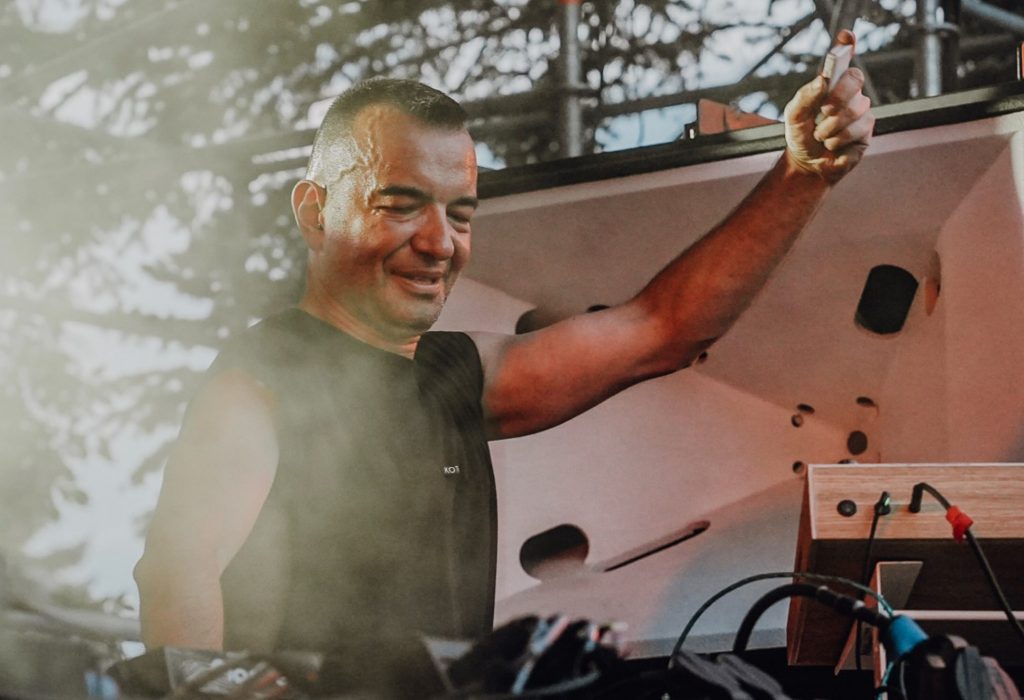
Even after decades in the game, your crowds keep getting younger. When you look out at this generational shift on the floor, what is your biggest surprise about what moves them, and what (if anything) concerns you about where modern nightlife is headed?
What I liked about the current generational shift is that some of the new artists have this punk attitude of destroying the tradition and doing things their own way, which is also reflected in the crowd, and I felt a certain creative freedom.
On the negative side, the current generation of music fans has a short attention span; they want everything at once – the bigger the better, more of an experience than listening to music – so certain aspects of the clubbing culture, such as longer sets, niche music events, appreciating the resident DJs, and clubbing in general versus the mega big festivals, are less desired. But I’m not concerned; I already see this generation getting more mature and starting to look for a deeper connection with the music and the culture.
Feel like clubbing right after this read? Don’t think it twice: tap here to find a dance floor near you on XCEED.