





I’ve had to force pen to paper with this one because the world of video game music is as intoxicating as Valheim’s fog of war: the farther you venture into its deepest corners, the more tediously wonderful things you discover, inevitably making you want to delve in more because Mother Nature made us curious creatures. But before I casually mention the Super Mario theme and curse both of our brains with that earworm for the next 48 hours, I’d like to pose an observation.
Not meaning to be a soundbox to the countless other electronic music features floating around the internet, but I’m going to ask you to imagine the acoustics, the sound design, and the utter sharpness that pumps out of your favourite nightclub’s sound system. Try and picture the deep wholeness of those high fidelity tracks, the kind that exposes every micro texture, embraces the deepest of thundering sub-bass and lets the beautifully crisp hi-hat breathe with total clarity. It is engrossingly immersive. Well, it’s also wildly greedy.
My guy’s track alone is easily eating up roughly 50,000 kilobytes as an uncompressed .WAV or .AIFF file on his USB stick. A pen drive, may I point out, that will probably be stacking at least another hundred tracks right next to it, if I’m being humble. An incredibly privileged and monstrous amount if you wind back to the very beginning of video games.
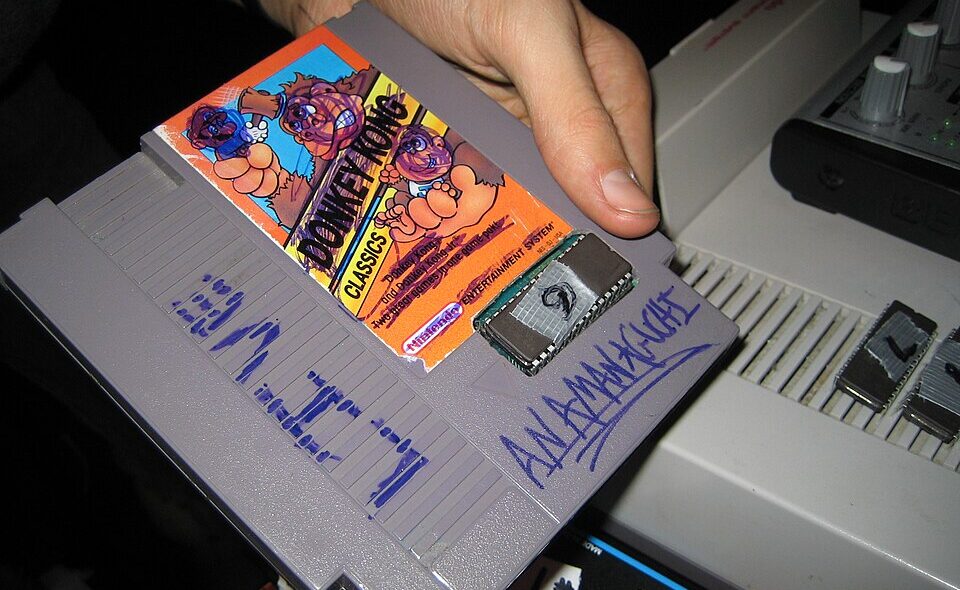
In the 80’s, an entire video game cartridge (every pixel, sprite, boss battle, and level layout, super well known from games like Pac-Man to Tetris) had to squeeze into a microscopic fraction of that space, bearing in mind the memory budget left over for the poor composer was usually about 4 to 8 measly kilobytes. To put you into perspective, that’s not even enough space to hold half a second of a recorded kick drum today, let alone a five minute slapper.
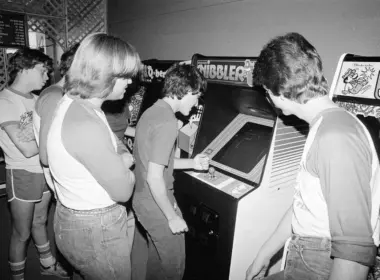
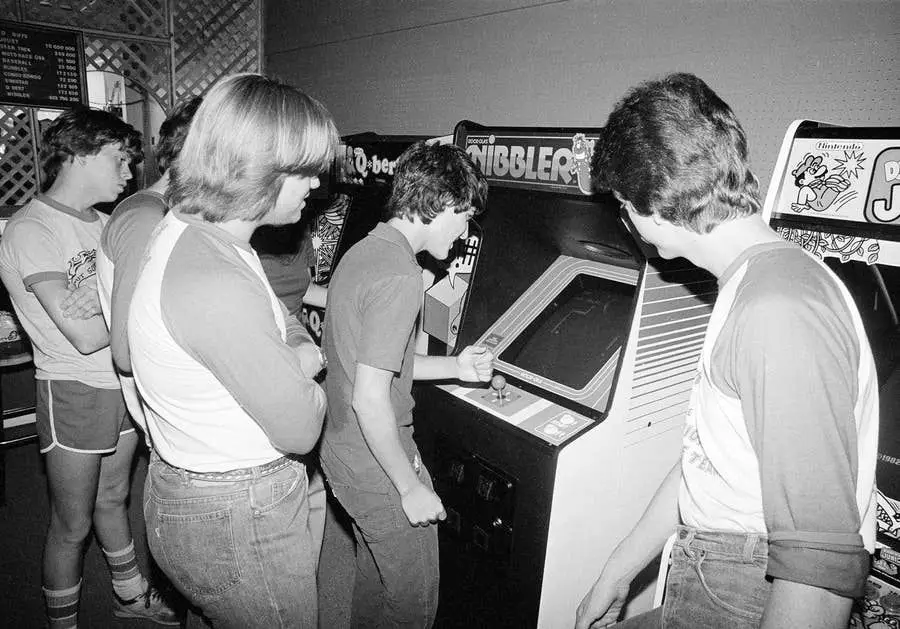
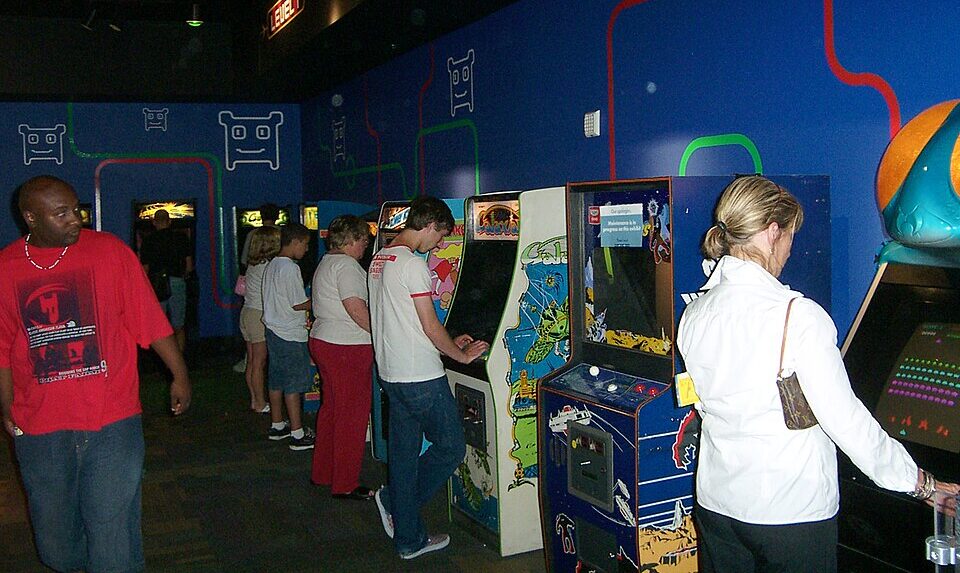
Some of you will be old enough to resonate with those nostalgic, bleepy noises squeaking out of your very first video game. It could have been from a CRT computer monitor, or shoved into the corner of an arcade, or humming from the back of an original Game Boy if not Nintendo. Those fast arpeggios (perfect examples being Rob Hubbard’s Commodore 64 warbles on Monty on the Run or Hirokazu Tanaka’s twitchy stuff on Metroid) latched onto their identity in disguise, eventually finding a permanent home in a whole generation’s temporal lobe and keeping us company ever since.
But most curiously, they’ve managed to acquaint themselves as the accidental footprints of modern electronic music too. Why do you think Burial famously laced his UK garage tracks with menu sound effects from Metal Gear Solid on tracks like Archangel? Or why Aphex Twin (under his Power-Pill alias) quite literally pressed a hardcore remix of the Pac-Man theme onto vinyl, or, more even, why Deadmau5 paid homage to the retro chiptune glitch with his song 8bit.
When sound first started being crammed into early consoles, game studios were more concerned about bringing in computer programmers who knew their way around hardware rather than musicians. When you think of it, why should a classical pianist or blues guitarist understand that 8-bit and 16-bit consoles didn’t have the horsepower to stream an entirely accomplished composition? The sonic introduction to games relied on the physical manipulation of dedicated sound chips: these being tiny slivers of silicon that acted as primitive synthesisers with severely limited voices.
I’m not going to hide from the fact that this took me a few goes to decipher, but the logic boiled down to physical space, which became an issue for video game sound engineers. They were dealing with chips like the NES or Game Boy ones, which apparently only had three or four audio channels to play with at any given moment. Although nowadays we still store sound on drives and weigh them in kilos, the intangibility of this storage was much more present back then.
Programmers like Tim Follin, who composed music for Silver Surfer and Solstice, had to work with just two buzzy square waves, a low triangle wave for bass, and a burst of white noise for percussion, sculpting mathematical waveforms in hexadecimal code in order to fake the bounce of a house kick or the gravity of a simple techno sub. If you’ve ever wondered why early video game kick drums sound like a crushed, synthetic laser-sweep (a frantic ‘pew-pew’) rather than an acoustic thump, it’s because it was white noise plummeting down in pitch at lightning speed. And if an explosion or a jump sound effect needed to trigger during the game, the chip ruthlessly had to hijack one of the musical channels and cut a melody dead to play it.
Naturally, the solution to overcrowded spaces is to remove or eliminate, as harsh as that sounds. Sound effects were more important than the soundtrack, which concluded with music being plotted down to the bottom of the priority list, and eventually being eaten up by the hierarchies of room. Weirdly enough, though, chopping up beats, percussion and basslines (rapidly cycling chords at 50 or 60Hz to fake polyphony) collaged them into efficient dynasties within a chip, accidentally opening the doors to the jittery arpeggios of electro, chiptune, and some of the most respected polyrhythmic subgenres of electronic music.
The guys who had never warmed up to electronic music or had ever set foot in a warehouse rave previously (basically a bunch of sleep-deprived programmers trying to squeeze a beat out of four audio channels) accidentally engineered the sonic skeleton of electronic dance music merely because of space. Over on the Sega Mega Drive (a 16-bit console), Yuzo Koshiro pushed the Yamaha FM synth chip into distorted acid house on Streets of Rage, while E Fugu composed Fatal Labyrinth on the Sega too. UK hardcore producer Dylan Beale (of Rude & Deadly) also smuggled his rave shifts onto the Super Nintendo for Wolverine: Adamantium Rage, accidentally writing proto-grime tracks like Tri-Fusion nearly a decade before Wiley (a history later excavated by the Diggin’ In The Carts doc and pressed onto vinyl).

Even when hardware limitations finally evaporated, and consoles gained enough memory to stream pristine audio, an unspoken understanding between gaming and underground club culture has remained fervently strong. Video games are (I guess) for kids, but also for the late night roamers who are up for a bit of mischief (in other words, tech-savvy, not-so-say hackers), who elegantly created the world’s most effective pirate radio stations and smuggled niche subcultures into bedrooms long before the internet made everything instantly searchable.
A kid figuring out how to boot up Wipeout without his parents’ permission implicitly feeds into the underground, both musically and integrally, which, in some shape or form, was the initiation of futurist breakbeats eventually stemming from The Prodigy and Orbital tunes. That kid tuning the car dial to MSX FM in Grand Theft Auto was getting a life-changing lesson in music taste, passively absorbing drum and bass or electro-funk before being old enough to get past a bouncer, effectively turning a leveraged 32-bit console into their first contact with electronic music. Whether it was Soichi Terada slipping Tokyo jungle into Ape Escape or UK speed garage blasting out of an N64 cartridge on Buck Bumble, games were training the young that electronic music is pretty awesome.
More than that, some game developers understood an opportunity in the sudden interest in weird digital glitches, and decided to take a chance at turning passive listeners into producers. This was before laptops turned bedrooms into a studio, where software like Music 2000 handed kids a PlayStation controller and accidentally taught them how to sequence grime and jungle. Games like Rez and Frequency leveraged the idea even further, collapsing the distance between playing a game and DJing by turning every button press into a live stem trigger, letting you physically feel how a techno track is built from the kick drum up.
Which brings us right back to that nightclub sound system, unapologetically pushing fifty megabytes of uncompressed low-end into our ears. Yet, when you’ve stood on a sticky dancefloor at 3 am dancing to someone like Four Tet or Overmono, you’ll still hear those 8-bit arpeggios piercing through.
We might not realise – or maybe everyone is, in fact, extremely conscious – but the amount of minor influences barging in from all areas and drastically moulding the music industry is far greater than we could comprehend. The continuous migration of cultures and the insatiable progress of technology are essentially the biggest catalysts of electronic music, but little did we know that video games had’t just fulfilled their recreational purposes; they’ve pretty much helped define a whole generation.
Don’t keep yourself hanging; go get a taste of that highly compressed music we take so for granted. Your next party is just around the corner at XCEED.